
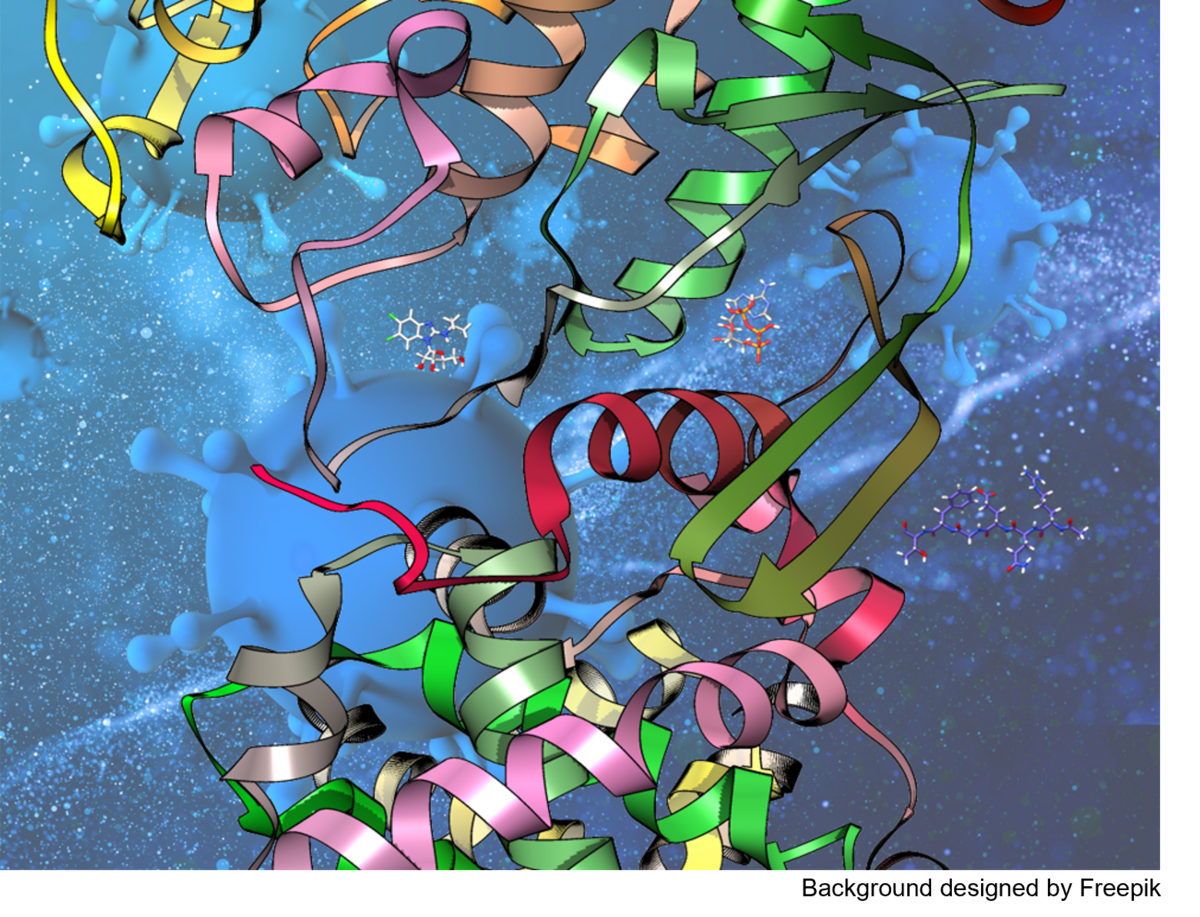
Computational drug design strategy for targeting herpesviral kinases
In our computational drug design strategy, we focus on the targeted inhibition of herpesviral kinases, particularly pUL97 from HCMV and BGLF4 from EBV. These kinases play crucial roles in viral replication and host interactions, making them promising drug development candidates. Although these kinases exhibit significant sequence differences compared to cellular CDKs, they share the same functionality and target proteins. We apply methods from structural bioinformatics to create models of these herpesviral kinases. Our aim is to identify small molecules that bind to the ATP- and/or substrate-binding sites and to develop inhibitory peptides that competitively interact with the interface between the viral kinase pUL97 and specific human cyclins. Following the modeling of pUL97 and BGLF4, our plan includes analyzing known kinase inhibitors, searching for new ones, and investigating their molecular-level interactions. Ultimately, we aim to develop inhibitory compounds that specifically target HCMV and EBV, based on computer-assisted predictions and experimental validations. This strategy will lay the groundwork for innovative antiviral treatment options.